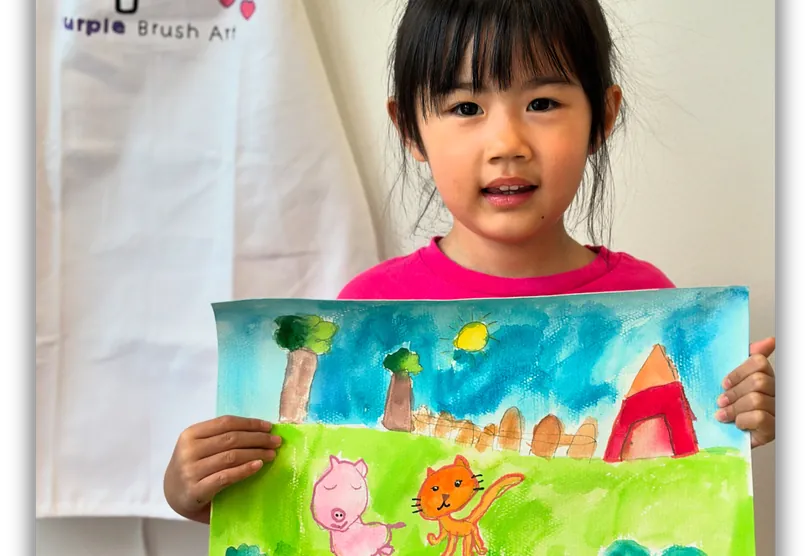
Children start making marks long before they can write. Most toddlers scribble by age 2, can copy a circle by about 3, and draw a simple person by about 4. That last step is a good sign they are ready for a class: they are no longer just exploring the crayon, they are trying to show something.
Signs your child is ready
- They can hold a crayon or brush and control where the marks go.
- They can stay with one activity for a while without needing a change every few minutes.
- They follow simple instructions in a group, like “dip, wipe, then paint.”
- They are comfortable without you for a drop-off class.
- They ask to draw or paint at home.
If your child checks most of these, a weekly class is a great next step. If not yet, painting side by side with you in a Parents and Kids class is a gentle way to start.
How children’s art develops
Art educator Viktor Lowenfeld described stages that most children move through. The ages are approximate, and every child moves at their own pace.
| Ages | Stage | What you’ll see |
|---|---|---|
| 2–4 | Scribbling | Lines and loops, later named (“that’s Mommy”) |
| 4–7 | Pre-schematic | First people and objects, often floating on the page |
| 7–9 | Schematic | A ground line, a sky, and a set way of drawing each thing |
| 9–12 | Dawning realism | More detail, and a wish to make things “look right” |
| 12+ | Pseudo-naturalistic | Perspective, shading and a personal style |
Good teaching meets children where they are. A 5-year-old needs freedom to tell stories in paint. A 10-year-old who feels their drawings “look wrong” needs real techniques, or they may give up.
Which class fits which age
- Ages 4–6: Little Creators, a drop-off class focused on the joy of creating and simple stories.
- Ages 6–9: Creative Explorer, where each child works on their own piece with personal guidance.
- Ages 9–13: Tween Artist, building technique alongside creativity.
- Ages 13–17: Youth Artists, from first steps to portfolio-quality work.
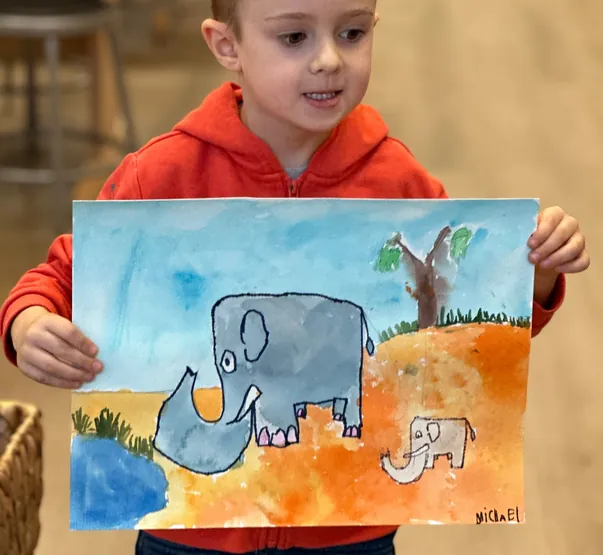
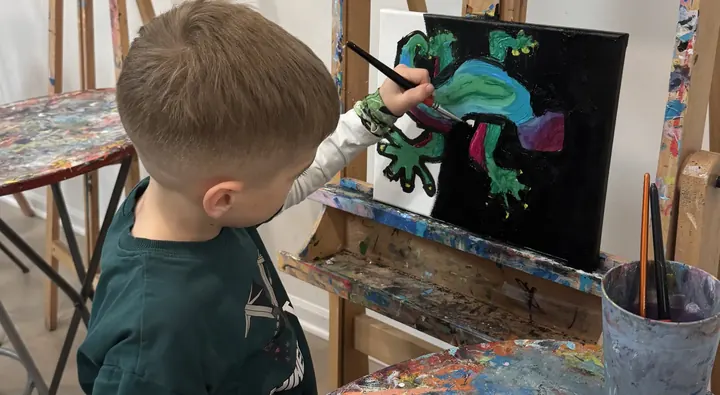
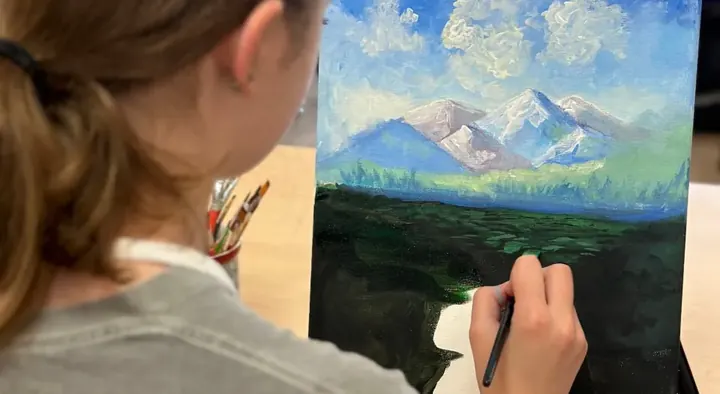
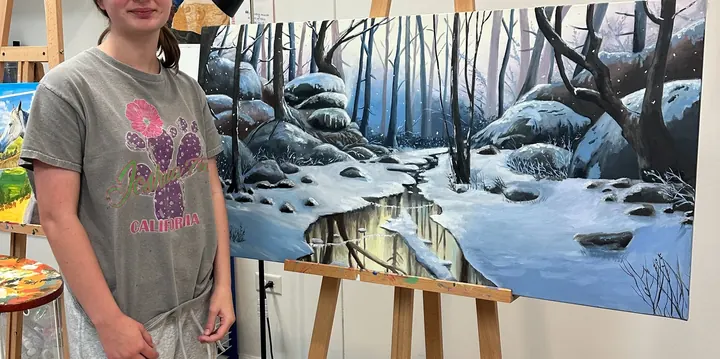
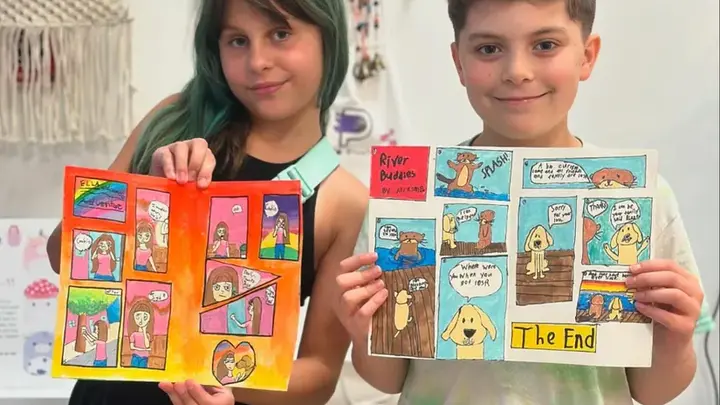
From first paintings to teen landscapes: Purple Brush students from age 4 to 17.
Is it ever too late?
No. Youth Artists welcomes teens who are just starting out, and our adult classes welcome complete beginners. Because every student works on their own project, a newcomer is never “behind” the rest of the class.
Frequently asked questions
Can my child join in the middle of a session?
Yes. Students can join anytime, and tuition is prorated for the classes left in the session.
What if my child doesn’t enjoy the first class?
If you’re not satisfied after the first class, we offer a full refund.
Do we need to buy supplies?
No. All art supplies are provided.
Sources
- Lowenfeld, V., & Brittain, W. L. Creative and Mental Growth. Macmillan. (University of Minnesota Duluth summary of the stages)
- Merck Manual Consumer Version. Developmental milestones from ages 18 months to 6 years. (MSD Manuals)